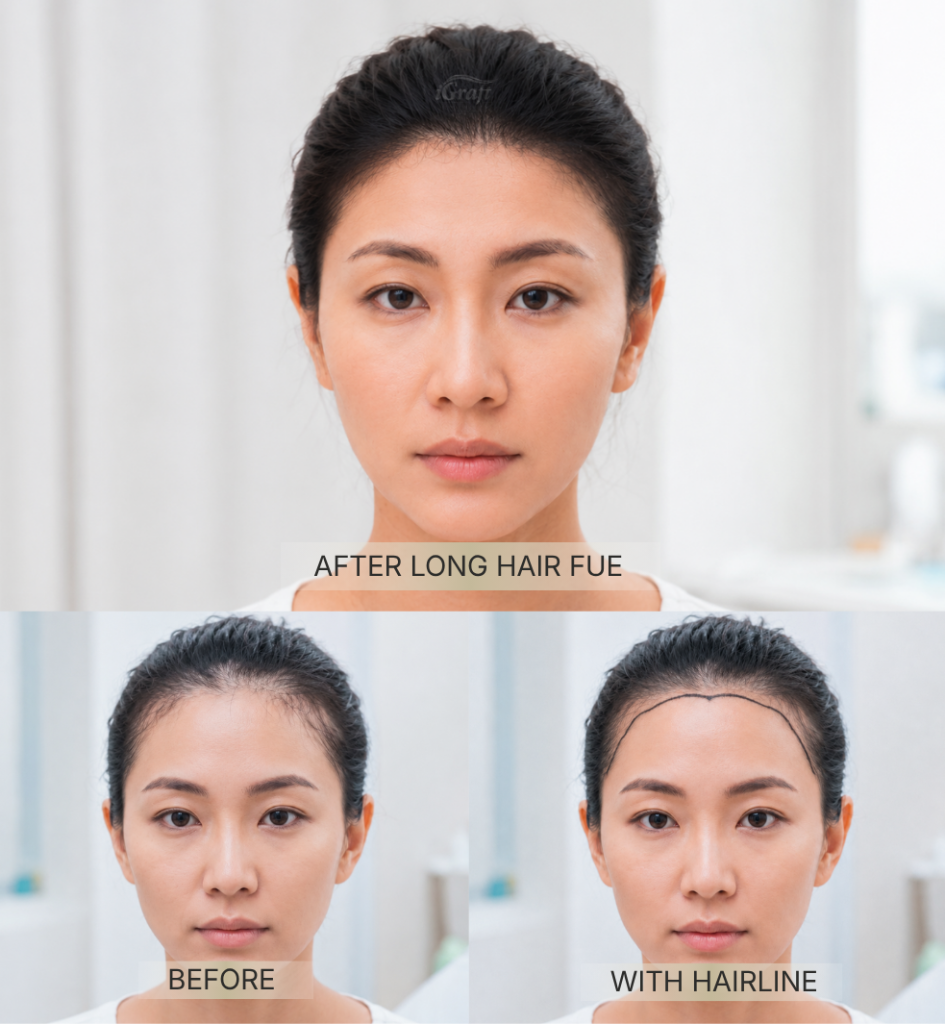
A considered, no-shave approach for women whose hair is closely tied to identity, styling, and the way they present themselves each day — performed entirely within preserved length, by Datuk Dr. Inder.
ABHRS Diplomate · ISHRS Fellow · 30+ Years Experience
Most patients arrive with the same observation: the change feels recent, but the photographs say otherwise. Recession is rarely dramatic in any single year — only across several.
01
A higher forehead than the one you remember
The frontal line drifts upward by millimetres at a time. The face begins to read older than the man behind it.
02
Temples that open before the centre does
Lateral recession often appears first, reshaping the frame of the face well before the central forehead.
03
Photographs that read differently than the mirror
Self-image rarely catches up with the change. Most patients first notice it through a photograph or a video call
04
A pattern that quietly progresses
Without a considered plan, recession continues. The window for an architecturally elegant outcome narrows over time.
Technique Details
within Preserved Length
Why It Matters
Why the hairline deserves more than a transplant.
01
The hairline frames the face
It is not a single line but a transition zone — irregular, soft, and entirely individual to the patient.
02
Position is not the same as restoration
A hairline placed too low, or too even, reads as artificial — and ages poorly. The right position respects facial proportion and time.
03
Density must be calibrated, not maximised
A natural frontal line is not uniformly dense. Selective placement is what produces a result that reads as native hair.
04
Shaved procedures rarely fit a real life
For most men, weeks of visible recovery are not an option. The procedure should not undo the discretion the patient has maintained until now.
How iGraft Helps
A frontal line drawn for your face.
Long Hair FUE follows the same biological timeline as any hair restoration. The visual experience differs — the underlying process does not.
01
Hairline drawn in person
Datuk Dr. Inder designs the frontal line directly with the patient — calibrated to facial structure, age, and the patient’s own preferences.
02
Position appropriate to age
The line is set where it will continue to read as natural across decades — not only in the year of the procedure.
03
Selective extraction
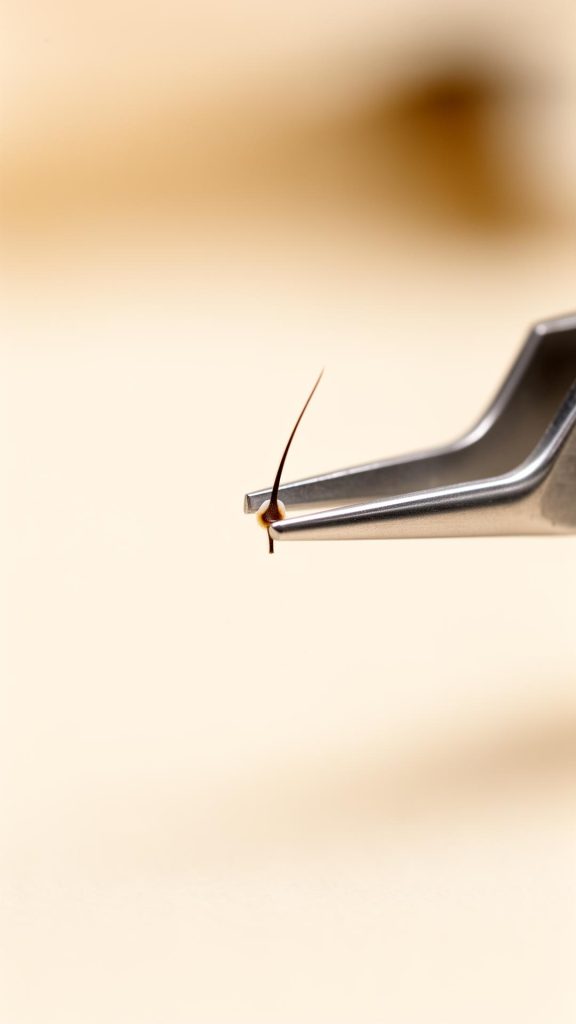
Grafts are taken individually, between full-length hairs, so the donor area is never visibly disturbed.
04
Frontal and temple restored together
The frontal line and lateral recession are treated as a single, continuous architecture — not as separate concerns.
05
Density that ages well
Placement reflects how a natural hairline behaves — softer at the leading edge, denser behind — so the result reads as native hair across years.
Return to Routine
A recovery the room won't notice.
Healing happens within the patient’s own preserved hair. Most men return to professional life within days — without explanation, and without a visible interval to account for.
01
Day 0
The procedure ends within preserved hair. The patient leaves looking essentially as he arrived.
02
Days 3–7
Routine resumes. The frontal area remains framed by surrounding hair throughout healing.
03
Months 3–6
Initial shedding settles. Early growth begins to redefine the frontal line within the patient’s own framing.
03
Month 12
Full character of the result is established — a hairline that reads as his own, restored.
Common Concerns
What recession usually looks like..
The majority of men arrive with one — or a combination — of the following patterns. Each is approached within a single, considered architecture rather than as an isolated procedure.
01
Early recession
A subtle drift of the frontal line. Restored at a position true to facial proportion, before the pattern advances further.
02
Temple recession
An opening of the lateral hairline that reshapes the frame of the face. Treated together with the frontal line.
03
M-shape
A combined central and lateral recession. Restored as a continuous frontal architecture, not two separate areas.
04
Mature hairline correction
A higher hairline brought into a position appropriate to age — restoring proportion without overcorrecting.
Frequently Asked
Direct answers.
The questions most often raised before a private assessment — answered with the same restraint as the practice itself.
01
Is it too early to consider treatment?
Early recession is often the best moment to plan. Acting earlier protects more of the existing frame and gives the doctor more architectural options across years.
02
Where will the new hairline be placed?
The position is established in person by Datuk Dr. Inder, calibrated to facial proportion, age, and the patient’s own preferences — never lower than would continue to read as natural over time.
03
Will it look like a transplant?
Naturalness is determined by hairline design and graft placement — both performed personally by the doctor. The intent is a result indistinguishable from the patient’s own hair.
04
Will I need to shave my head?
No. The procedure is performed without shaving the donor area. Surrounding hair conceals the working zones throughout healing.
05
Will the result still age well?
The plan accounts for how surrounding hair is likely to behave over time, so the hairline reads as natural across years — not only in the year of the procedure.
A frontal line, considered in person.
A doctor-led assessment with Datuk Dr. Inder — to understand what hairline restoration can look like, and what the right plan is for you.