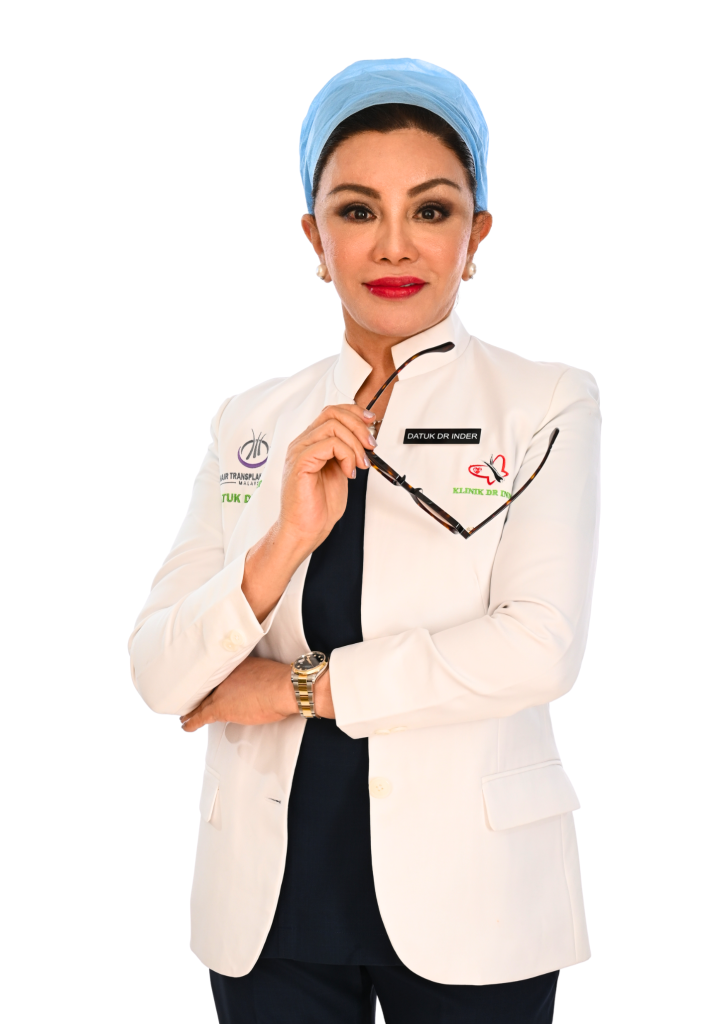
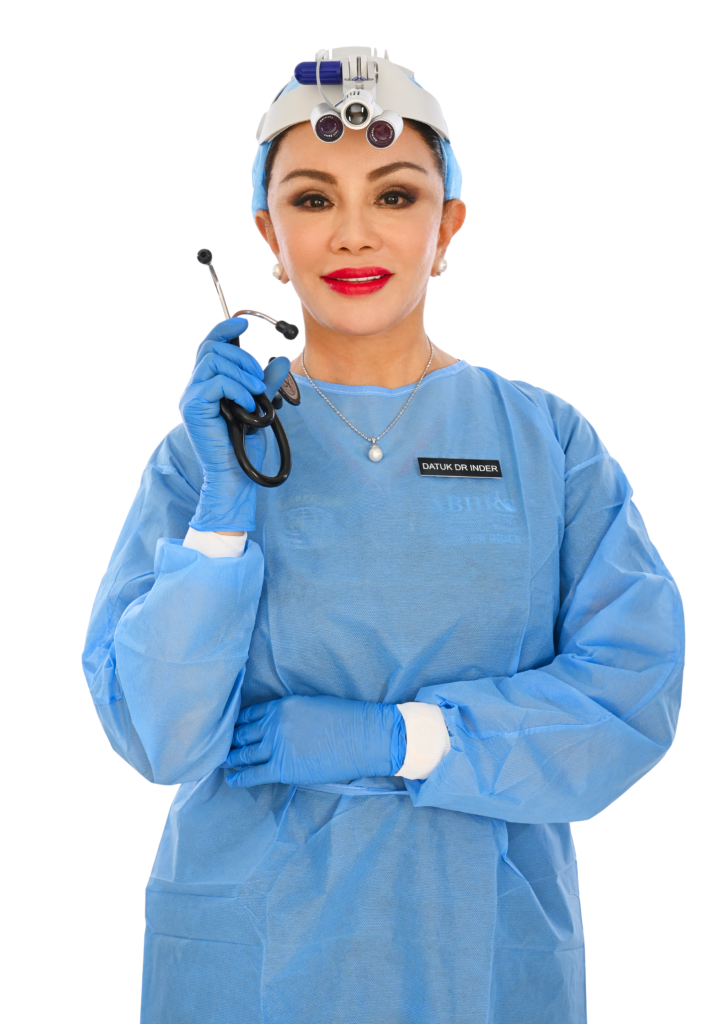
The Founder

Datuk Dr. Inder. Three decades of doctor-led practice.

Founder of iGraft Long Hair FUE. ABHRS Diplomate, ISHRS Fellow, and one of a small number of surgeons globally who has refined the no-shave method into a continuous standard of care — held to the international benchmarks set by the discipline’s governing bodies. The practice is built around a single belief: that hair restoration, done well, should preserve the person rather than announce the procedure, and should hold its naturalness over the long term.

Datuk Dr Inder Founder of iGraft Long Hair FUE

Credentials

A medical career, built quietly.

The credentials below are not the point of the work — the work is the point. They are listed because, in this category, they remain the exception rather than the standard.

01

ABHRS Diplomate

Board-certified by the American Board of Hair Restoration Surgery — the field’s most demanding clinical examination.

02

ISHRS Fellow

Fellow of the International Society of Hair Restoration Surgery, the global professional body for the discipline.

03

30+ years of practice

Three decades performing hair restoration personally, across thousands of patient-led plans

04

Founder of iGraft Long Hair FUE

Architect of a no-shave protocol developed over years of refinement, and the standard under which the practice operates.

Datuk Dr. Inder. Three decades of doctor-led practice.

What She Stands For

A surgeon, not a celebrity doctor.

01

The hairline is her work

Hairline design and graft placement are performed personally — the most consequential decisions are not delegated.

02

The patient is read carefully

Donor density, hair character, facial structure, and stage of life are read in person before any plan is proposed.

03

Honest recommendations

When surgery is not the right step, that is the recommendation. The objective is the right plan — not a procedure.

04

A continuous standard

Every patient receives the same depth of design, the same time, and the same surgeon — from first conversation to twelve-month review. The methodology is doctor-led at every stage, and calibrated to hold its naturalness years after the procedure.

Her Philosophy

Her philosophy on natural hair restoration.

A quiet conviction shapes every plan — that the most accomplished restoration is the one no one is meant to notice. Naturalness is not a finishing touch; it is the work itself. Identity is preserved, proportion is respected, and the result is calibrated to the person rather than to a template.

01

Naturalness as the standard

Density, direction, and angle are designed to read as the patient’s own hair — never as a procedure that has been performed on them. Anything visibly engineered is, by definition, a failure of the design.

02

The hairline as architecture

The frontal line is not a single edge but a transition zone — irregular, soft, and entirely individual. Each follicle is placed with the patient’s facial proportions, age, and natural growth pattern in mind.

03

Preserving identity

Restoration should return the patient to themselves, not to a more fashionable version of themselves. Age-appropriate design and personal character are treated as the brief, not as constraints.

04

Long Hair FUE precision

Working within preserved hair removes the safety net of a shaved field. It demands a higher order of accuracy in extraction, sorting, and placement — and that precision is the discipline of the practice.

05

Discretion as a clinical principle

Privacy is treated as a quality of the work itself. The procedure should not announce itself before the result is ready to be seen — and the patient should be able to return to their life without explanation.

06

An understanding of women

Female restoration was long treated as an exception in this category. She has spent decades treating it as a distinct discipline — temple shaping, part-line density, and facial framing performed entirely without shaving.

07

Confidence as the outcome

The measure of the work is not how the result photographs, but how the patient carries themselves afterwards. Emotional wellbeing is part of the clinical objective, not separate from it.

Recognition

Held to a standard rather than a celebrity profile.

Recognition follows the work, not the other way around. The credentials below reflect the discipline of the practice — and its alignment with the internationally recognized standards of the field — rather than its visibility.

01

ISHRS

Fellow of the International Society of Hair Restoration Surgery.

02

ABHRS

Diplomate of the American Board of Hair Restoration Surgery.c

03

30+ Years

Three decades of doctor-led, hands-on practice.

04

Datukship

Conferred title in recognition of contribution to the medical field.

Who She Treats

Patients who expect a doctor.

The practice is shaped for patients who expect the most consequential decisions of the procedure to be made by the surgeon — and who value depth of attention over volume. Each plan is individualized, and the practice has long accommodated patients with diverse restoration needs, from first-time candidates to refinements of complex prior work.

01

Executives & founders

Patients whose calendar cannot accommodate visible recovery.

02

Women

For whom shaving is not a starting point, and discretion is non-negotiable.

03

Public-facing patients

Whose visibility is part of their work and identity.

04

Patients seeking refinement

Including refinement of prior work performed elsewhere, and patients travelling internationally for a considered second opinion.

Frequently Asked

About the founder.

The questions most often raised before a private assessment — answered with the same restraint as the practice itself.

01

Yes. Consultation, hairline design, and graft placement are performed personally by Datuk Dr. Inder. The medical decisions are not delegated.

02

A deliberately small number, by appointment only. The practice is structured around depth per patient rather than volume.

03

ABHRS is the board certification specific to hair restoration surgery; ISHRS is the global professional society for the discipline. Both remain comparatively uncommon among practising surgeons in this category.

04

Yes. Female restoration — hairline lowering, temple work, and part-line density — is a long-established part of the practice and is performed entirely without shaving.

05

Yes, where appropriate. Suitability for corrective work is established in person and treated with the same standard as primary procedures.

A direct conversation with the doctor.

A confidential, doctor-led assessment with Datuk Dr. Inder — to understand
what is possible, and what the right plan looks like for you. The conversation is
private, the recommendation is honest, and the standard does not change
from the first consultation through to the long-term review.

ABHRS Diplomate · ISHRS Fellow · 30+ Years Experience