Results · The Master Gallery

The full body of work, across men and women.

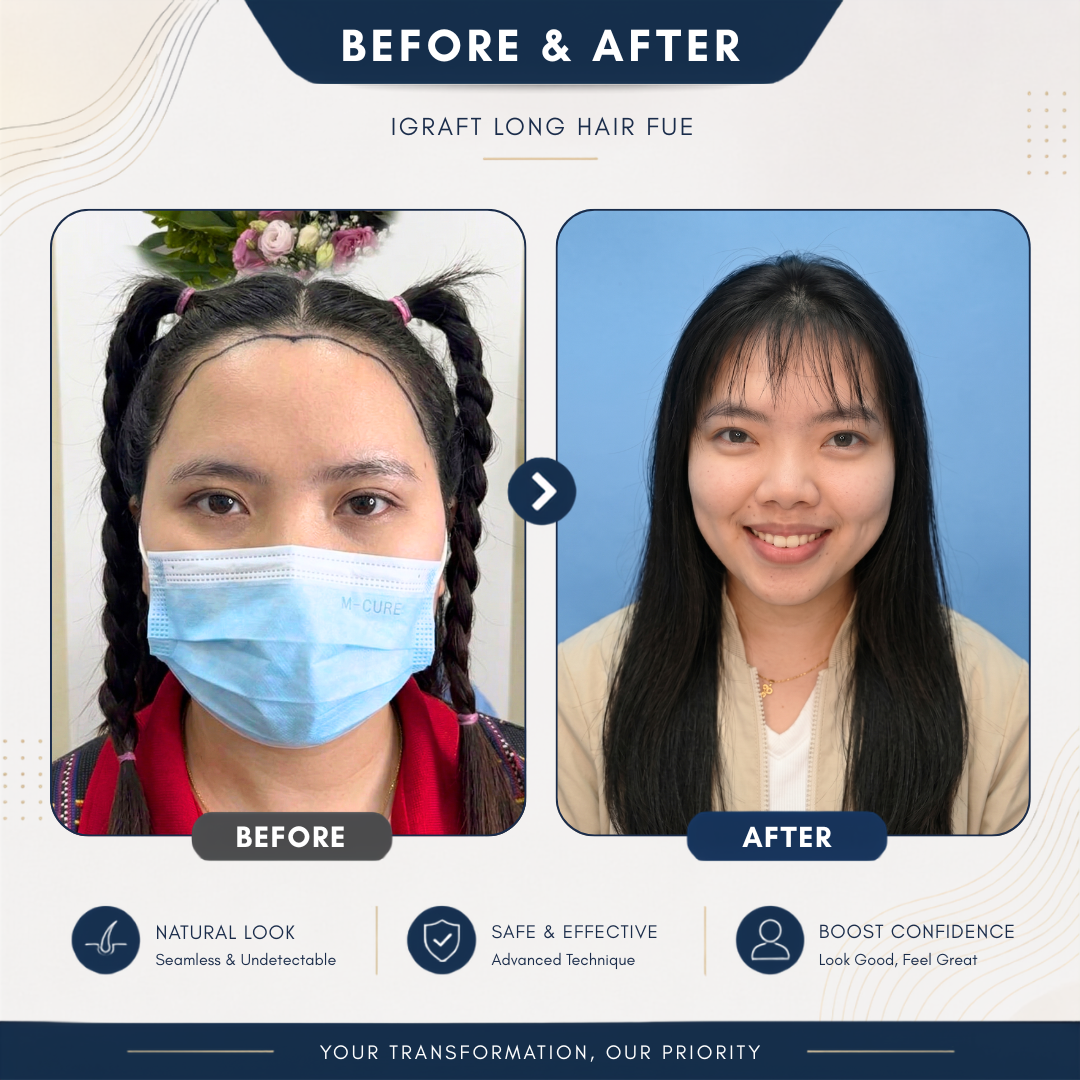
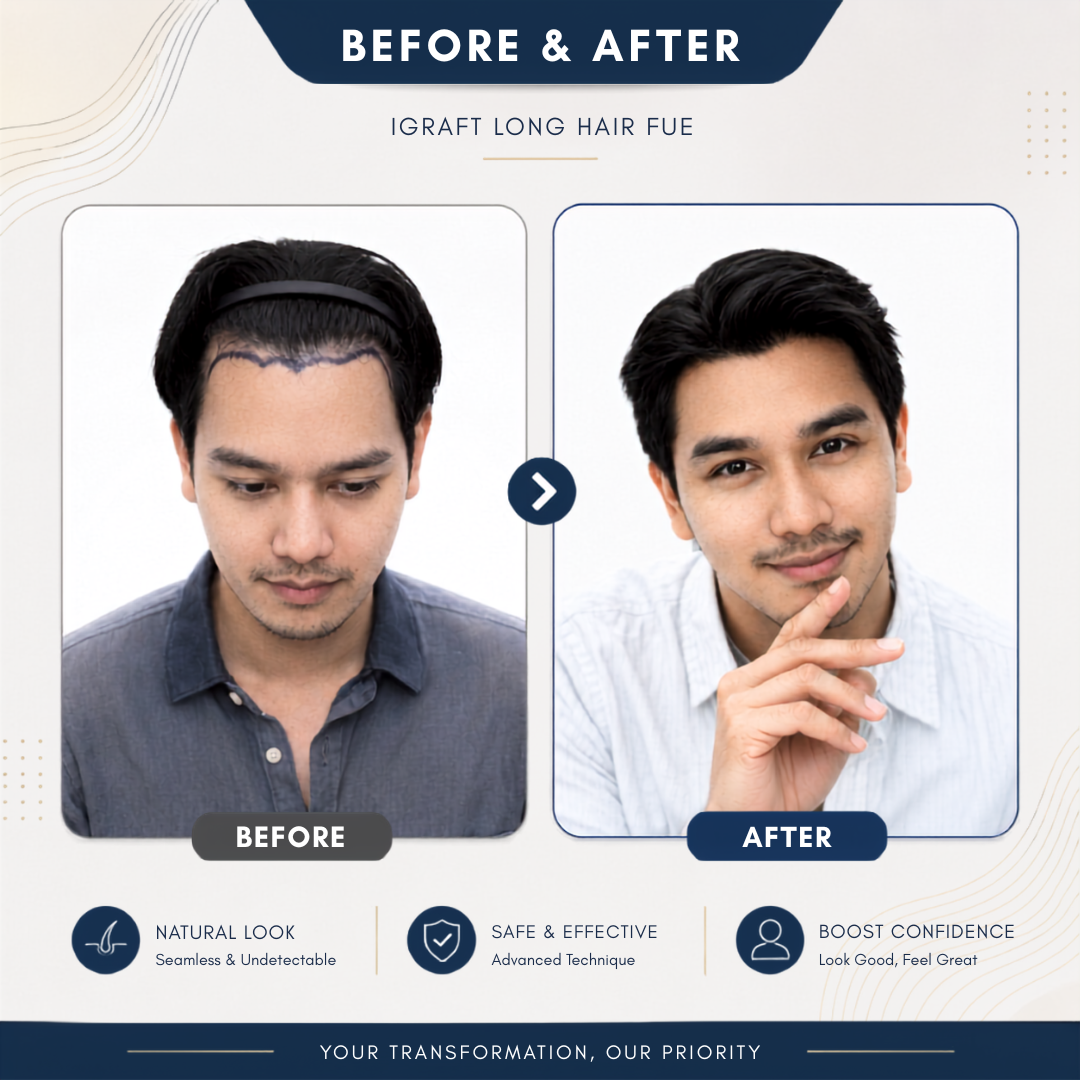
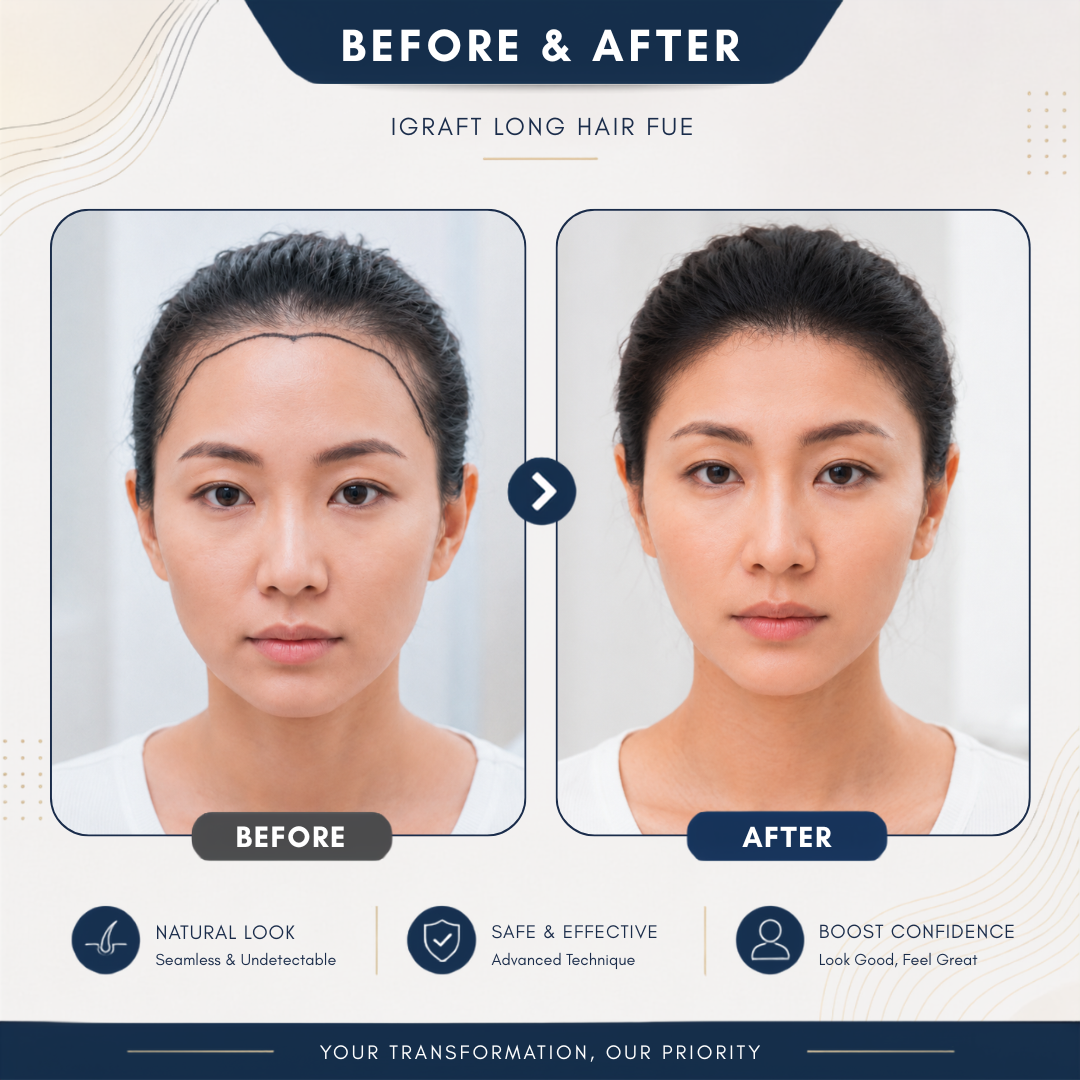
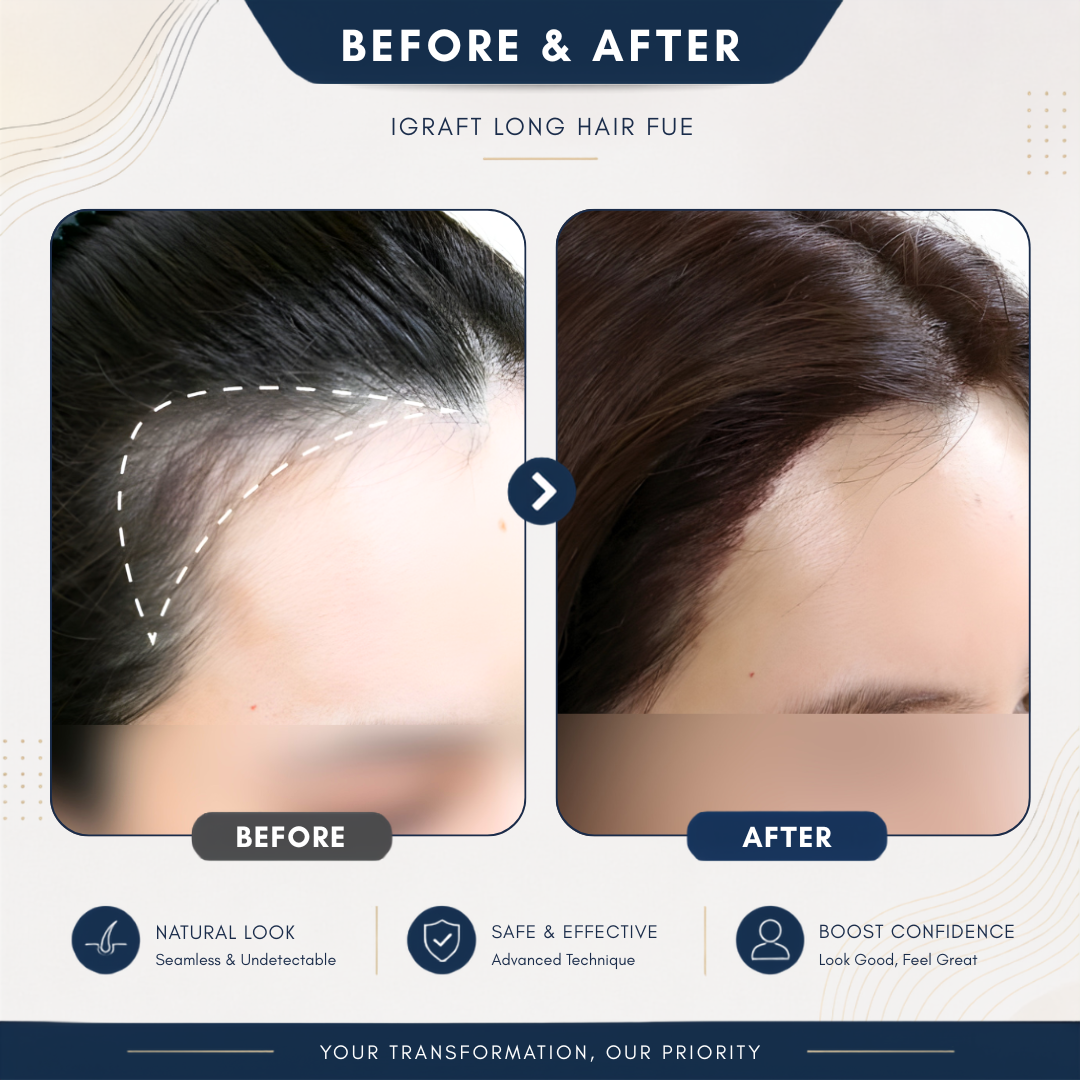
The master gallery of iGraft Long Hair FUE — patient transformations across hairline, crown, temple, and corrective work, in men and women alike. The strongest examples of naturalness, discretion, Day 0 framing, donor concealment, and quiet artistry are gathered here.
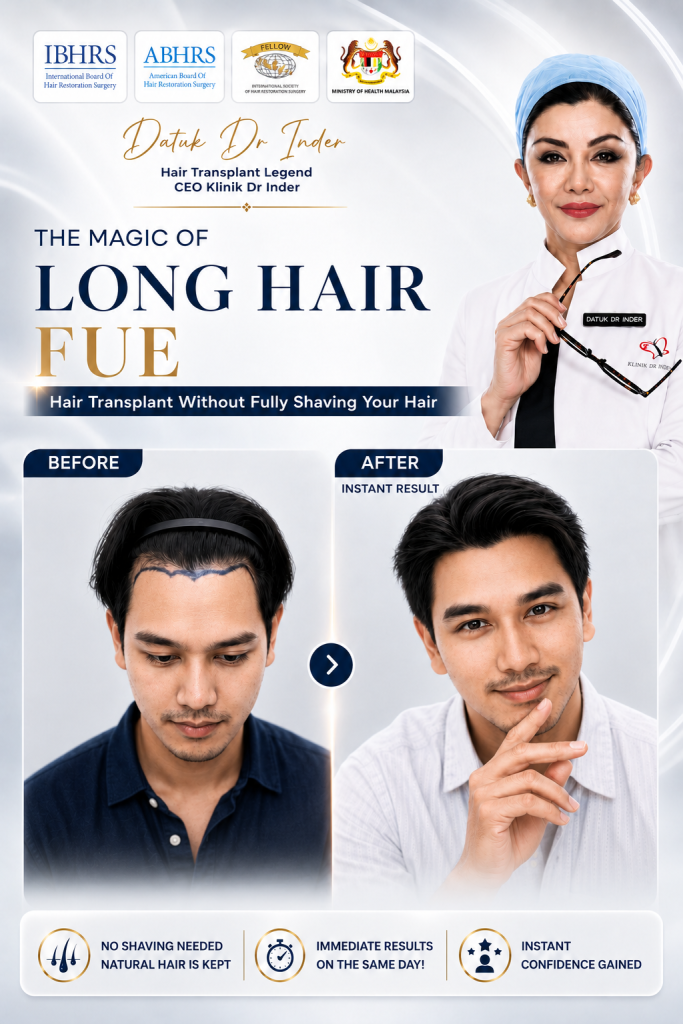
igraft long hair fue - hero section image

Editorial Note

One standard of work, for every patient.

This page is not the men’s gallery, nor the women’s. It is the proof of iGraft Long Hair FUE itself — the standard of naturalness, discretion, and artistry that the technique is held to. Detailed male-specific and female-specific transformations are explored in dedicated context further down.

Browse

Studies, organised by concern.

Browse by concern, treatment area, and stage of growth.

Day 0 Advantage

See your hairline immediately.

Because surrounding hair is preserved throughout the procedure, many patients see the intended framing of their restored hairline on the same day — long before regrowth has even begun. It is a quiet but meaningful reassurance, and the first reason this work feels different from the start.

01

Surrounding hair preserved

No shaving means the existing hair continues to frame the face during and after the procedure.

02

Immediate framing preview

The intended position, density, and direction are visible the same day — within real, living hair.

03

Reassurance from the start

Patients leave with a clear sense of where the result is going, not only how it will eventually arrive.

Timeline

How a result actually arrives.

The full character of a Long Hair FUE result emerges across months — quietly, and within the patient’s own framing. Each stage is documented in identical conditions.

01

Before

Baseline study under standardised lighting and angle.

02

Day 0 Preview

An immediate visualisation of intended density and design within preserved hair. This is where Long Hair FUE is different — the restored framing can often be seen immediately within preserved hair.

03

Month 3

Initial shedding settles. Surrounding hair continues to conceal the working zones.

04

Month 6

Early growth integrates within the existing frame; direction begins to read as native.

05

Month 12

Full character of the result is established — coherent, integrated, the patient’s own.

Naturalness

The qualities that make a result read as native.

Recognition follows the work, not the other way around. The credentials below reflect the discipline of the practice — and its alignment with the internationally recognized standards of the field — rather than its visibility.

Irregular leading edge

A hairline is a transition, not a line. Slight irregularity is what the eye recognises as natural.

Softness in transition

Density rises gradually behind the leading edge. Nothing arrives as a wall.

Facial framing

Position, curvature, and proportion are calibrated to the face — not to a template.

Density as artistry

Direction, angle, and follicular grouping are placed by hand. The work is restorative, not decorative.

Hairline Studies

Close detail, without the theatre.

The frontal line is a transition, not an edge. These close studies show how density softens at the leading edge and reads as the patient’s own hair.

Frontal Edge

Female Hairline

Donor

What the donor looks like, after.

Because no shaving is performed, the donor area is read at its visible length throughout. These studies show donor zones in the weeks following the procedure.

Donor — Day 7

Donor — Week 4

Donor — Female