Hairline Lowering

A forehead brought back into proportion.

Whether naturally high or gradually receding, a forehead that feels too prominent can change how the whole face reads. Female hairline lowering with Long Hair FUE places new hairs along the front of the hairline, entirely without shaving, to restore balance with restraint. The first step is an unhurried, doctor-led conversation — not a treatment plan.

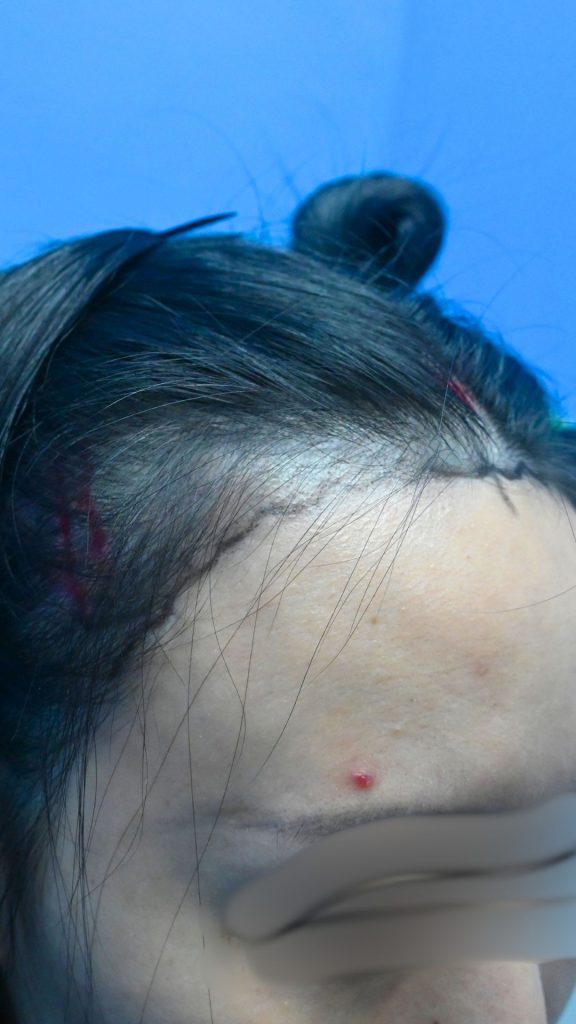
What the Day 0 preview actually means - igraft long hair fue

Why It Feels Different

Why a high hairline is felt in every photograph.

A high or receding forehead rarely seems dramatic to anyone else. It is felt privately — in the way hair is styled, in photographs, and in how balanced the face feels.

01

A face that feels out of proportion

When the forehead feels too prominent, the balance between hairline, features, and face shape shifts — even if no one else can say why.

02

Styling that compensates

Many women rely on a fringe or forward styling — not because they prefer it, but because they feel they need it.

03

Pulled-back hair feels exposed

Ponytails, updos, and bright lighting can feel uncomfortable when the front hairline reads too high.

04

A concern carried privately

Most women hold the awareness for years before raising it openly. The emotional weight is often heavier than the visible difference.

Datuk Dr Inder - Drawing Hairline

The Process

Four stages, one doctor throughout.

01

Private assessment

A confidential review of the forehead, the existing hairline, facial proportion, and the donor area at the back and sides of the scalp. Early review can begin remotely.

02

Hairline drawn in person

Datuk Dr. Inder designs the new frontal line directly with the patient — calibrated to facial structure, age, and personal preference.

03

Treatment day

Grafts are extracted selectively within preserved hair and placed personally by Datuk Dr. Inder along the planned line — without shaving.

04

Review across the year

Growth is reviewed at three, six, and twelve months, with each stage assessed in person.

The iGraft Approach

A softer line, never an overcorrection.

For women, hairline design calls for a more conservative and precise approach. A line placed too low, too dense, or too straight can immediately look artificial. Where restoration is the right answer, the aim is a soft, irregular frontal line that restores proportion without overcorrecting.
01

Position appropriate to age

The new line is never placed lower than would continue to read as natural over time.

02

Soft at the leading edge

A natural hairline is a transition zone — softer and finer at the front, denser behind.

03

Following natural direction

Each graft is angled to blend with the existing hairline and its natural direction of growth.

04

No shaving, at any stage

The donor area stays visually intact at full length, so styling can continue as normal.

05

Doctor-led, in private

  1. Designed and performed personally by Datuk Dr. Inder, in a setting calibrated for complete privacy throughout.


Familiarity During Recovery

A familiar appearance, throughout the process.

Where Long Hair FUE is the appropriate path, healing happens within the patient’s own preserved hair. Daily life continues with a familiar appearance — though aftercare, gentle handling, and realistic timelines remain part of the process.

01

Day 0

The procedure ends within preserved hair. The patient leaves looking essentially as she arrived, with the new line already visible as a preview.

02

Days 3–7

Gentle aftercare and careful styling around the front hairline. Most routines resume within a few days.

03

Months 3–6

Temporary shedding of transplanted shafts is normal in the early weeks. Early growth then begins to define the new line — gradually and at a realistic pace.

04

Month 12

The new hairline settles across roughly twelve months and is reviewed in person.

Who May Be Suitable

Not every woman with a high forehead is a surgical candidate, and the responsible answer is often non-surgical guidance, medical referral, or a recommendation to wait and re-assess. Where Long Hair FUE is appropriate, suitability tends to follow a clear set of patterns.

01

A stable hairline

A naturally high or settled hairline, rather than active, ongoing loss.

02

Preserved donor reserve

Stable density at the back and sides of the scalp, evaluated personally for length, calibre, and long-term reliability.

03

A clear diagnosis

Hair loss in women can have many causes, and not every type should be treated with transplantation. Diagnosis comes first.

04

Realistic expectations

Women seeking a more balanced proportion — not a dramatically different face.

Results

A hairline that reads as her own.

Outcomes are reviewed privately and discussed only in the context of the patient’s own face and styling. Results vary between individuals, and no specific outcome can be promised.

Patient studies shared privately during consultation

Datuk dr Inder - Doing consultation

Frequently Asked

Considered questions.

The questions most often raised before a private assessment — answered with the same restraint as the practice itself.

01

The position is established in person by Datuk Dr. Inder, calibrated to facial proportion, age, and personal preference — never lower than would continue to read as natural over time. It cannot be set before an assessment.

02

No. Where Long Hair FUE is the right answer, surrounding hair is preserved at full visible length throughout. The defining principle of the method is that the patient’s own hair is not shaved.

03

Because transplanted hairs keep their length, the intended shape and direction can be seen immediately as a Day 0 preview. It shows the design — not the final density.

04

Yes. Temporary shedding of the transplanted shafts is a normal part of the follicular cycle and typically occurs within the first weeks. The follicles remain in place and re-enter growth in the months that follow.

05

The frontal line and temples are planned as a single, continuous design. Whether both are treated together depends on the pattern and the available donor reserve, and is decided at the private assessment.

06

Early growth is generally visible from around month three, with density building through months six to nine. The full character of the result typically settles across roughly twelve months.

A considered conversation,
before any decision.

An unhurried, doctor-led assessment with Datuk Dr. Inder
— to understand your hairline, your facial proportion,
and whether lowering genuinely aligns with your long-term appearance.

ABHRS Diplomate · ISHRS Fellow · 30+ Years Experience