
Protein Shakes and Hair Loss: What the Science Actually Says
Many fitness enthusiasts face a frustrating dilemma: you hit the gym to build your dream physique, but you start noticing more hair than usual in the shower drain. Suddenly, a rumor circulating on fitness forums catches your eye—are my daily protein shakes causing my hairline to recede?
At iGraft, where we specialize in advanced Long Hair FUE (Follicular Unit Extraction) hair restoration, we believe in separating gym myths from clinical realities. If you are worried that your post-workout shake is sabotaging your hair, here is exactly what the scientific literature says.
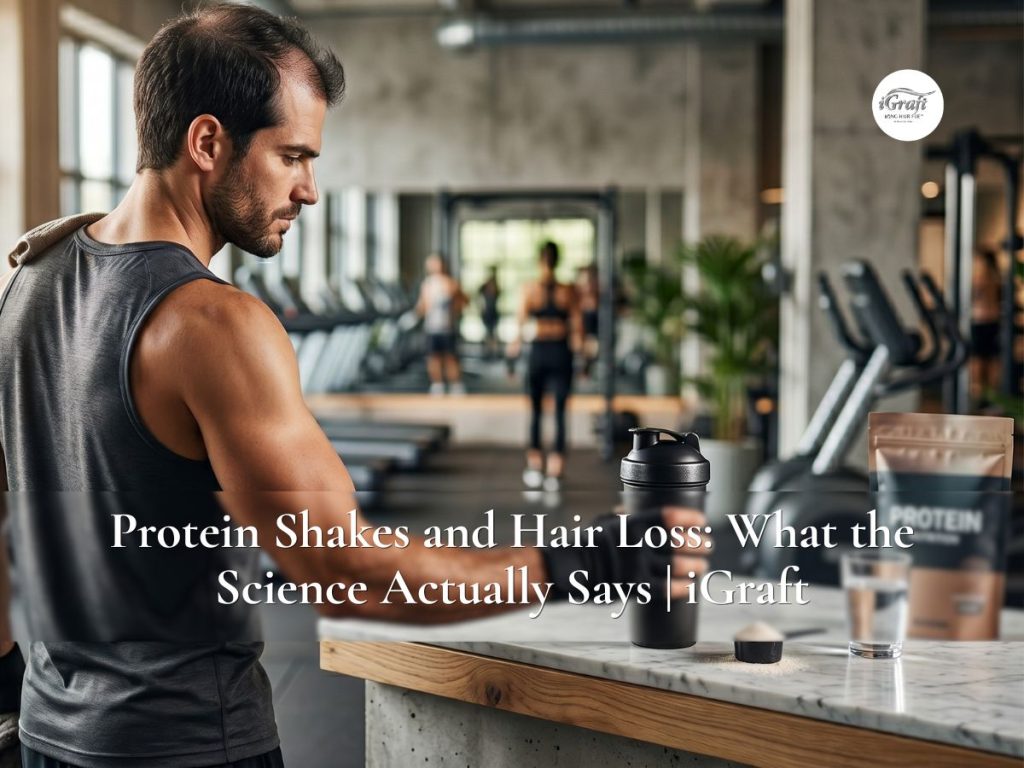
The Core Science: Can Protein Shakes Cause Hair Loss?
The short answer is no, protein shakes do not directly cause hair loss. Protein is an fundamental building block for your entire body, including your hair. In fact, your hair shafts are made almost entirely of a tough protein called keratin.
However, the connection between your gym supplement routine and your hair health is a bit more nuanced. It isn’t the protein itself that causes trouble; it’s how certain types of protein can influence your hormones—especially if you are already genetically prone to thinning.
4 Common Questions Answered by Science
1. Does Whey Protein Isolate accelerate male pattern baldness?
This is where the myth meets a bit of scientific truth. Some clinical studies suggest that Whey Protein Isolate (WPI) and certain branched-chain amino acids (BCAAs) can increase levels of testosterone in the blood when combined with intense weight training.
For someone with no genetic predisposition to hair loss, this slight hormonal bump won’t matter. But if you carry the gene for Androgenetic Alopecia (male or female pattern baldness), your body converts that extra testosterone into a more potent hormone called Dihydrotestosterone (DHT).
The Verdict: DHT binds to susceptible hair follicles, causing them to miniaturize (shrink) over time. Whey protein isolate doesn’t create hair loss, but it can act as an accelerator if your follicles are already sensitive to DHT.
2. Is Whey Concentrate safer for my hair than Whey Isolate?
Yes, generally speaking. Whey Protein Isolate undergoes rigorous processing to strip away fats and carbs, leaving a highly concentrated, fast-absorbing protein. This specific concentration process is what is most frequently linked to elevated fasting testosterone levels.
Whey Protein Concentrate (WPC), on the other hand, is less processed and retains more of its natural components. Switching from an Isolate to a Concentrate—or moving toward plant-based proteins like pea, soy, or hemp protein—is a common, hair-safe alternative for fitness enthusiasts.
3. Can a lack of protein cause hair loss?
Absolutely. While too much highly processed isolate might accelerate genetic thinning, a severe deficiency in dietary protein will trigger a completely different type of hair loss called Telogen Effluvium (excessive shedding).
When your body is starved of amino acids, it enters survival mode. It halts non-essential functions—like growing hair—and forces active follicles prematurely into a resting phase. A few months later, massive shedding occurs. To maintain a healthy mane, ensuring an adequate intake of daily protein is non-negotiable.
4. What should I look out for in my supplement labels?
When buying protein powders or pre-workouts, always read the fine print. Watch out for added ingredients that deliberately target hormonal pathways:
DHEA and Creatine: Some pre-workouts or fitness blends include elements like DHEA or high doses of creatine. Some clinical studies have suggested creatine can increase DHT conversion rates, which may further stress sensitive hair roots.
Anabolic Prohormones: Ensure your supplements are third-party tested (such as Informed-Choice or NSF Certified for Sport) to guarantee they aren’t cross-contaminated with hidden prohormones that aggressively spike androgen levels.
Protecting Your Hair While Staying Fit
If you love the convenience of protein shakes but want to safeguard your hair, follow these quick adjustments:
Switch to Plant Proteins: Pea, hemp, or brown rice proteins provide excellent amino acid profiles without affecting your systemic hormone balance.
Focus on Whole Foods: Prioritize getting your protein from eggs, chicken, fish, tofu, and lentils rather than relying solely on processed powders.
Monitor Your Hairline: Keep a close eye on your temples and crown. If you notice a steady, patterned thinning, it is a sign that genetic factors are at play, independent of your diet.
When Nutritional Changes Aren't Enough: The iGraft Long Hair FUE Solution
If your hair loss is driven by genetics (DHT sensitivity), swapping out your protein shake will only do so much. Once hair follicles have completely miniaturized, the most reliable way to restore your natural density is through modern hair restoration.
At iGraft, our signature Long Hair FUE technique represents the gold standard in discreet hair transplants:
No Shaving Required: Unlike traditional FUE which requires shaving the donor or recipient area, Long Hair FUE allows you to keep your existing hair length.
Immediate Cosmetic Preview: Because the hairs are transplanted at their full length, you can see the natural direction, angle, and framing of your new hairline from day one.
Zero Downtime in Appearance: You can walk out of the clinic and return to your social or professional life without anyone realizing you’ve had a procedure done.
If you love your active lifestyle but want to take control of your changing hairline, schedule a personalized scalp analysis with our experts. Let’s design a scientifically backed strategy to keep both your body and your hair in peak condition.
When reading is no longer enough,
a quiet conversation follows.
ABHRS Diplomate · ISHRS Fellow · 30+ Years Experience